Episode Transcript
[00:00:03] Speaker A: Welcome to Foraging, a podcast about environmental humanities.
In this second season, we step into the Foragers engagements Beyond the Human, a series of public events that brings together artists, researchers and enthusiasts around the practice of foraging.
It starts with simple questions. What grows here? What can we take?
What should we leave?
From there, we move into bigger conversations about care, community consumption, and the way we relate to more than human worlds.
We also explore how artistic practices can sharpen those questions, complicate them and reframe them.
My name is Jose Verflusum. I'm a performance and visual artist and co curator of the Foragers.
Plants are a constant presence in my practice. Their stories, their imaginaries, and the new languages they open for the complexity we're living through.
In each episode, I invite two artists from the Foragers. We talk about their work and what foraging means in their practice as a method, a metaphor, and a way of asking better questions.
Not only what can I take? But also what does this place ask me in return?
I hope these conversations can inspire you.
Let's begin.
So it's January 19th, 2026. We are here with two artists who will show their work in the Foragers Expo. It's Tim. Theo de Koenig. Hello, Tim the and Neela Muller. Hi, Neela.
[00:01:54] Speaker B: Hi.
[00:01:56] Speaker A: We will explore their work, their practice, and how it relates to the thematic of foraging.
In the coming hour or so, we will dive into their artistic world and collect, gather, forage and connect topics, issues and challenges that are driving your practice.
Tim Teo, you describe yourself on your website as a time traveler and an urban farmer. It's quite intriguing, I find, but first and foremost, you seem to be a photographer, but maybe you can give some bit of an insight in the complexity of your practice.
[00:02:41] Speaker C: It's funny you took that part of my biography because it's quite an old one and not very up to date.
[00:02:46] Speaker A: You're not time traveling?
[00:02:47] Speaker C: I think I'm still time traveling traveling. And I think we are all sort of time traveling. If you work with the land and with the environment, it's quite difficult not to touch upon the layers of time that have been passing or that are coming. So I think nothing has changed from that.
And indeed, you're right. I'm schooled as a photographer, but I find it very difficult to just see myself as a photographer because most of my work is embedded in an environment.
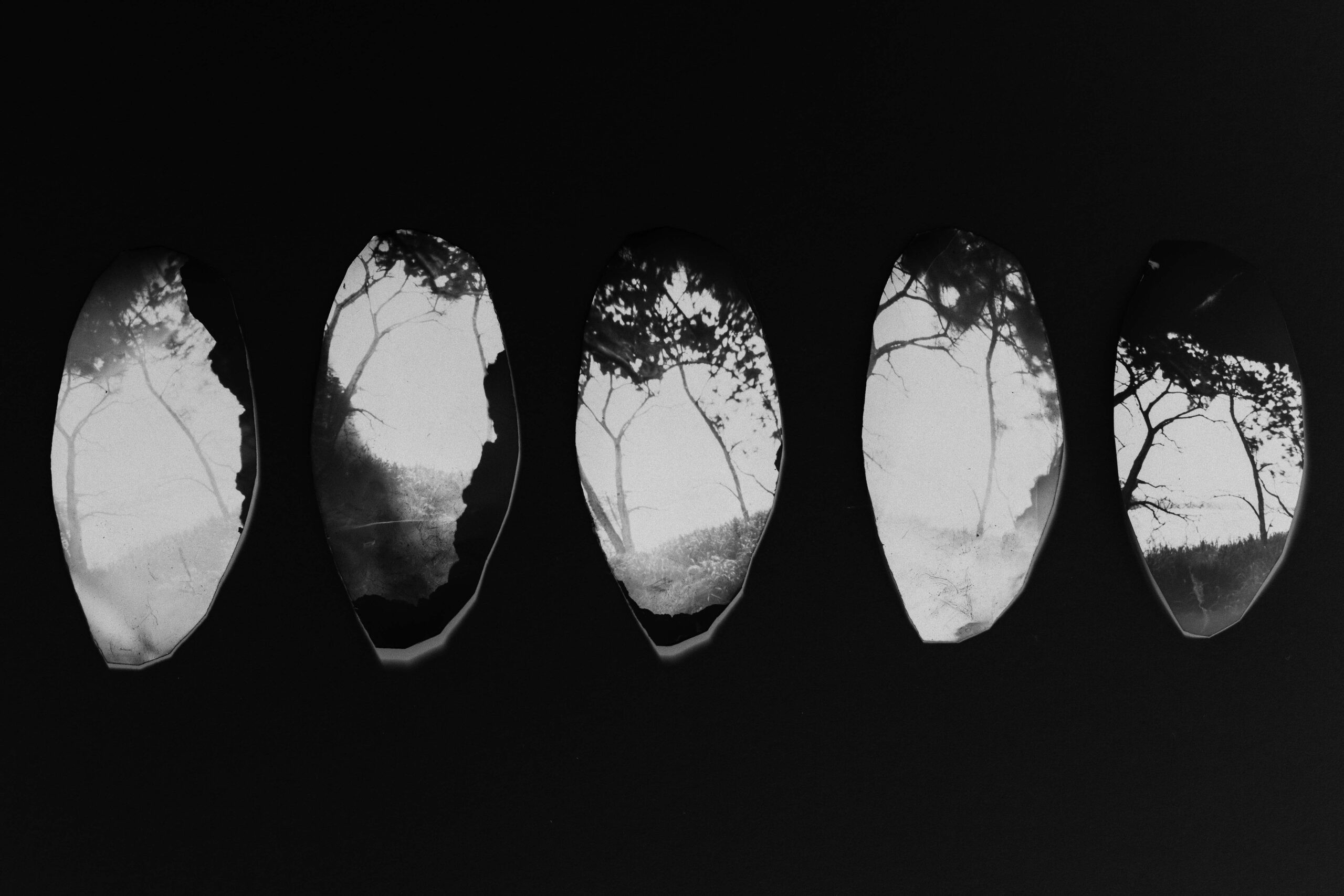
I work a lot with locally harvested plans to make developers. I make in situ cameras from the landscape itself, and I grow my own photographic resources. So I have Some kind of photographic garden in my backyard.
So I think these elements are quite important.
And for me the photography part or the production of images is actually something that follows from this relation with the environment and touching upon all these things.
[00:03:52] Speaker A: Can you tell a bit more about this photographic garden you have next to your house? Because that's quite intriguing.
[00:04:00] Speaker C: I know it sounds very full of wonder actually. It's just a lot of weeds and that's the beautiful thing. A lot of common plants can be used for photographic uses, for artistic uses, for making color, for example, have been used for many centuries.
So I'm trying to use this old. I think that's what the time traveler also kind of refers to.
I'm trying to connect all these kinds of old knowledges on how plants and resources have been used and try to mix them with contemporary knowledge of photography.
So yeah, there's a lot of poppies in the garden which are hard to cultivate actually.
There is rosemary, there is thyme, which makes great developers.
There is a lot of red berries and flowers which make incredibly good ink for sun prints.
So there's a lot of color and it's a very low maintenance garden and
[00:05:08] Speaker A: it's also like a very tasty garden.
[00:05:12] Speaker C: It's one of the things I have, if I grow a tree in my garden, it has to bring fruits or it has to have some other use.
[00:05:23] Speaker A: We can come back later to this aspect of foraging and in the relation to foraging. But I wanted to know from Neyla, your practice revolves around listening. So your practice, Tim Teo, is more about looking, seeing.
Your practice revolves around listening, recording sound.
You describe your practice as an ecology of listening.
Can you explain that a bit, especially the word ecology in relation to listening.
[00:05:57] Speaker B: So first of all, thanks for having me.
So yeah, I think for me an ecology, I mean of course we can talk about this in a very environmental studies direction, but I guess an ecology is always a set of relations of different entities that are present in an environment.
And in that sense I developed that term ecology within my practice because there's all these different ways of listening that are present in my practice and they are entangled and they're entangled with many different actors and entities as well. It's not like when I'm listening, it's not just me, but there's always something or someone I'm listening to or with. So it's like to point to all these relations and relationships that are present in this practice of listening and also of these different modes of listening that are part of my practice. So not to say it's just like one way of listening, but there's all these different ways of listening and approach towards sound and sound making as well.
[00:07:09] Speaker A: Yeah. And yeah, you're both participating in the Expo, the Foragers that will take place that's starting in April. Can you describe a bit of work that you will expose there or that you're thinking to expose there? Because the program is not totally done, but there is an intention of work to be exposed.
Maybe Tim Teo first or the process that leads to that work.
[00:07:37] Speaker C: I'm still in a very process phase, but actually it was you who guided me to this very intriguing place in Brussels. It's called the swamp of Hanshoren.
I don't know how to say it in English, but let's say the Swamp of Hanshooeren. And it's a very surreal place surrounded by train tracks, apartment buildings.
But the swamp itself, it's hard to urbanize it because the ground gets wet all the time again. So it's like some kind of leftover place where there is a lot of species finding refugees, shelter from the fastness of the city.
And it's also a place where a lot of. I saw it now a lot of local citizens also find this natural environment.
And I think that also marks the importance of having this small ecologies in cities where both living and non living creatures can thrive. And also for us humans it's important to have this.
So I'm working on that place and I'm using the same techniques I started using two years ago. So I'm trying to make land cameras, which means I look for holes in the landscape. It can be rabbit holes, it can be erosion holes, it can be sewer pipes.
And I'm using those holes to construct cameras. And besides that also got intrigued when I've been mainly making walks in the swamp at this moment.
So there's a lot of willow trees.
And actually this kind of tree is very interesting because it manages to eradicate poisonous aspects from the ground. So it's a phyto remediative plant, so it actually kind of regenerates the ground as it's growing.
And especially in a city context, it's really interesting to see these plants occur naturally and most of the time we are unaware of the beneficial effects it can have on the soil.
So I'm also working towards this willow trees.
[00:09:52] Speaker A: So and you would maybe install a land camera in a willow tree, A
[00:09:58] Speaker C: hollow willow tree or it can be a hollow willow tree.
The only thing like willow trees, they rot from the Inside. So most of the time the holes in willow trees just look up at the sky which is difficult to photograph because it's long exposure photography. So they take 15 minutes to a day, some even two days.
So yeah, then you just see like a white mess. But it can be like a small hole that a bird made in a tree or some leftover rabbit holes.
Actually it's like most of the holes I use are like spores of some creatures that used to crawl or used to live there before I arrived.
And I try not to interrupt too much. But of course by using the hole, if it's like the hole of a rabbit, it becomes inhabitable for the rabbit itself. So try to be aware of that.
[00:10:59] Speaker A: Yeah, you try not to destroy somebody's home.
[00:11:03] Speaker C: Yeah.
[00:11:04] Speaker B: I have a question, I just, I was really curious.
So does this work like a camera obscura or you photography like you use a camera to photograph through the hole or you really take a photo paper
[00:11:19] Speaker C: and then it's like the low tech camera obscura things which is quite nice actually because as a photographer you used to drag this immense weight of heavy full frame cameras especially like you know how it is to carry lots of equipment in the forest.
And for me it's quite nice actually. I go to a place, I make measurements of the hole I find. So it's first I try to lock the place and like experience the place a little bit. I prepare everything at home and then I go there and I have a scissor, I have some photographic paper and that's about it.
So it's like this little camp making. I collect stuff on site, try to make it air, not air, try to make it light, tight.
But of course it's always difficult to know when you're working if it's going to work or not.
[00:12:14] Speaker A: And then you will develop that image that is projected in that willow tree or in that rabbit hol with some organic or with plants also from the swamp or that's from your garden.
[00:12:29] Speaker C: Well you told We're 19th of January now, so we're mid winter so it's quite difficult to.
Well it's a fun season. Yeah but it's a fun season to think and like I think both in life but also in my practice I need this winter time to relax and to draw back a little bit like in this safe zone of the house.
So you need this moment of.
But I'm looking actually to use the willow trees itself as a developer but I still have to run some tests.
[00:13:05] Speaker A: Really how would that work?
[00:13:08] Speaker C: Actually you could Basically, use any plant as a photographic developer.
The only thing you need is like, there's the active ingredient of.
The active ingredient of chemical developer. It's.
I had it and now I lost it.
[00:13:31] Speaker A: There is an active ingredient, but we lost the name. It will come back.
[00:13:37] Speaker C: No, no, it's here also somewhere.
Phenol. Didn't have to look it up.
So every plant has phenols inside in the leaves. And it's the same thing that is, but in much higher concentrations present in the chemical developer.
And just by mixing it with washing soda and vitamin C, you can make a basic developer, which of course is not as stable as the traditional developers.
It gives staining. You need to correct your times. You get a lot of fogging on the paper or the film.
So it's, I think, a different approach than the exactness of photographic recording. There's a lot of elements that crawl into the development, into the making of the work.
[00:14:23] Speaker A: And this work will be, is the photographic image, is it fixed or will it also change over time?
[00:14:32] Speaker C: Good question.
[00:14:35] Speaker A: That's maybe to come and see for the people.
[00:14:39] Speaker C: Most of my recent work has been made with organic developers and organic inks and they are not stable.
So it happens that they change over time, they change color, they start to fade slowly.
Some things happen.
So it might be, if you visit the exhibition, that the first week you see green work and then a week later it's certainly blue.
[00:15:04] Speaker A: But that is quite interesting, I think, because the concept of time seems to play a very important role. Your work.
[00:15:12] Speaker C: Yeah, and I think mainly on the question of fixing it this after time. What happens after?
Like, also for Neil, what happens after we've been at the place. Like, our practices are very slow and we spend a lot of time at the place and we open all our senses. But then we leave this place and we try to transform this place into a story and we bring it to people. We.
We connect with it.
But also it's like how memory works. It's not a fixed thing. You can't have a fixed idea of a place.
Especially when it's concerning imagery and photography on nature. It's quite often or on the one hand this very romantic image, or on the other hand, this apocalyptic after the fact image.
And there's no in between. There's like not this regular soft place where you can just go, so I hear you humming.
[00:16:16] Speaker A: So I suppose you are agreeing with it.
[00:16:19] Speaker B: I just find it highly interesting and I think it's so.
Yeah, it's just really exciting to hear about how the practice is Informed by the land and vice versa. So it goes in these two ways. And then so how the photographs change, like the environment is changing. And this like very close resonance somehow between you and. Yeah. The things that you encounter in different places. So I think that's just really interesting.
[00:16:48] Speaker A: Yeah, I think the word resonance is also a very important concept for both of your works. But before we dive into that, maybe Nelio can describe a bit the work that you are going to.
Placed or exposed in the exhibition.
[00:17:01] Speaker B: Yes.
[00:17:02] Speaker A: Are the two works one work?
[00:17:05] Speaker B: I think so. Maybe I have to start bit earlier before the work. So. Because it's part of a long term project that I'm doing for a couple of years now that is oscillating around a forest in Germany where I come from, the Turingen Forest.
It's located in the. Yeah. East of Germany. It's the second largest forest of Germany.
And this forest, it's a very old grown forest.
So it exists since around 10,000 years. And it grew for most of its existence as a variety of different trees, mainly beech and birch and oaks, but also coniferous trees.
But then in the last 200 centuries, so with the beginning of industrialization, it got transformed into this monoculture plantation of spruce trees.
And the spruce is a very straight and very fast growing tree. So that's why it was the perfect tree for the forestry industry.
But with this monoculture plantations comes a lot of problems which are already ongoing since actually the beginning of this monoculture plantation. So the actual situation that we have now that the forest is changing, disappearing, happened already many times throughout this centuries, especially since this very strong. Yeah.
Interaction through human hands and minds and systems.
So yeah, now because sort of the spruce tree is growing very fast and very straight, but the roots are not going very deep into the ground.
So now with the hotter and drier climate and temperatures, the trees become very weak. And then of course monoculture in itself is already very weak. As we know a biodiverse forest would be much more resistant.
And so the tree is getting more and more weak. And then there's this little beetle called bark beetle or Ips typographus, I think letter setter in Dutch and goes into the trees and eats these tunnels under the bark and lays its eggs there and then leaves to the next trees. And then after the bark beetle comes the fungi. And that actually lets the tree die off or dry out, basically.
And that happens right now in a rapid speed in the forest. Since around 2018, there is a huge bark beetle outbreak.
And what the forest management is doing in the forest where I come from is they answer the these extensive clear cuts to push the beetle out. So there's like different methods that one could abroad this issue. So there's like some forests where they just let the beetle roam through, and then the forest will manage itself, hopefully. But in the Thuringian forest, because it is such an economically exploited forest, they try to do this process as fast as possible. So they cut all the trees off, and then you have these massive clear cuts. But this destroys the soil and the whole ecology is changing. So it has a huge impact on the forest. So nobody knows right now. So the forest is disappearing and nobody knows how and if there will be a new forest.
And my project, I am retracing and reacting to these changes through sound and listening since a couple of years now. And for the exhibition, I want to do audio essay that is tuning into all these different actors that are present in the forest.
And it's more like for experimental audio essay. I also did a recording with the choir of my hometown that is singing about these very particular German forest imaginations that are very present still today, about these old grown, dark, romantic forests that are actually completely different than the reality.
So you have this choir. And then there's like a couple of interviews I did with different people.
Amongst them, an older woman who was one of the women that reforested the forest in the forties after the Second World War. The forest was hugely destroyed because of bombings and fires. But then also there was a huge storm and a huge bark beetle outbreak back then as well. And so back then, already spruce monoculture got reforested with spruce. Again, nobody learned from any mistakes, of course.
And then in that time in the 40s, that were mainly women that were doing this, and they were called Kulturfrauns, or culture women.
And they got very little payment, but they worked really hard and reforested the forest with the spruce trees. And I made an interview with one of these women and she had this very beautiful poem that she was writing about how she was collecting wood in the forest because she had not so much money and she needed to heat her house. And that was not allowed, of course, to collect the wood. And. Yeah, and how she was like navigating through, like stealing the wood, but instead keeping her job. And she wrote a little poem about this. And I have. So this poem is somehow the starting point for the audio essay. And then you can listen to it and sitting on like.
How would you say this in English? Like, cut off wood trunks from the forest.
So the trees carry all these different stories and histories that are connected to the forest.
[00:22:58] Speaker A: Wow.
It's also a whole timeline that you're describing a history of a forest and a history of a country actually connected to.
[00:23:08] Speaker B: Of course, I mean there's like always when we talk about environments, they are always connected to geopolitical, historical issues. And I think it's important to consider. Consider this as well.
[00:23:22] Speaker A: Yeah, I was. Because in your.
When you were explaining what you were working on now, you, you mentioned experiencing the place, you talked about resonance. And I invited you both for this podcast because I think you're both doing kind of the same work with the.
With different means and with different materials. But it both seems for me like a way of foraging. But then you have another bag or you have both different foraging tools or devices.
Is that something that you relate to? And also I related to the experience of the place or the resonance because in foraging there is a lot of reading of the landscape to forage. You need to know where the berries grow, where the river is flowing, etc. Is that something you relate to this reading of the landscape or the.
Yeah. All these talents are.
Yeah.
Things you need to know about the landscape before you start working.
[00:24:33] Speaker B: Absolutely, yes.
[00:24:37] Speaker A: Can you elaborate on this? Like which tools you use or how it feels?
Yeah, it's hard.
[00:24:44] Speaker C: Not many tools actually. I think the tools you use, intuition, Intuition, it's stories, it's knowledge about how nature works, how plants work together and really seeing this interconnectedness between things and knowing how to. Or learning ourselves how to read it.
And it's very hard to do it on your own. Like Neil is talking, you have conversations when you're working outside. It's field work. You meet people and they guide you through the forest and their knowledge they have. So I think it's extremely important to have this backdrop of knowledge of people you meet.
And I think that's maybe the difference between. I like in the exhibition that we're talking about foraging and not about harvesting. I think it's a big difference.
A lot of people when I talk about my work, they say you're harvesting, but actually I'm not. I think foraging, it's stepping into this relations, like human relations, non human relations and trying to orient in a place.
And I think speaking for myself, it's really trying to orient. I truly experienced the loss of knowledge of not knowing how to.
I know how to read the sun, to navigate north and south.
Like all these small aspects, we lost so much.
So I'm trying to find this orientation and I think this kind of practices, this active listening, finding deep states of attention, it's really important for that.
[00:26:20] Speaker B: Yes, agree.
[00:26:22] Speaker A: Okay.
[00:26:23] Speaker B: Yeah. I see myself very much in there and I get this also.
I could imagine that similar with you Tim Teo also that this like long relation to a place or to an environment, that this is very important. And that of course that's why I also always have to refer first to the forest when I talk about my practice because it is so connected to that place and it could be never like this with another environment because it's almost like the forest informs my research and practice as well. And it's about this listening and like all the different engagements and relationships you build also through this long form projects.
[00:27:11] Speaker A: Yeah. And I think what I detected in both of your work is also a sensitivity to loss.
So Neela, in your practice, in more particularly in your work, the forest echoes back.
You investigate how sound art and research can play a role in spreading understanding of biodiverse, struggling with the challenge of climate change.
And in a way, yeah, Fola, in a way you're documenting loss. And Tim Teo, I read on your website a text, a quote from Susanne
[00:27:48] Speaker C: Sontag, that website again.
[00:27:49] Speaker A: Yes, I really foraged your whole website.
[00:27:53] Speaker C: Nobody goes there me.
[00:27:56] Speaker A: And you refer to cameras, which I thought was an interesting quote. While an untold number of forms of biological and social life are being destroyed in a brief span of time, a device is available to record what is disappearing.
So you're recording kind of the slow violence of the dying Turian forest.
And you in your practice, Tim Teo.
Yeah, it's also you capture slow these slow organic movements and developments. And do you see your work as a form, as of restorative history for these damaged for these landscapes is a question to both of you.
[00:28:43] Speaker C: Thanks. It's an interesting question and I'm happy you got the Susan Sonta code because I think it has been almost some sort of starting point in how I started thinking about photography and imagining the environment.
Because it is quite strange if you think about photography. It started or it was invented at the moment like mid industrial revolution. And it only developed due to the paradigms of this industrial revolution. So it could have been something completely else, but it was in this logic and it went really fast.
So this need for exactness, this obsession with fixing the image, this obsession with making objective images, using photography to do microscopic photography and understanding nature, environment, our bodies better through that.
But on the other hand, it's like also a symptom of this time. It makes the World.
You can publish the world. There's a lot of photographers in the 19th century who travel to far countries, they take photographs of the landscape, they bring it back and it's like the world becomes collectible, collectible, grass will archivable. But we don't think on how we archive these things or what do we archive. And so there's a lot of ideas in this quote that brought me further on how to think about photography. And actually I think the quote, that's the reason why I stopped using a camera and started to go back to this camera obscuras and this homemade mixtures of alchemical, organic chemistry to develop.
Because it's like a sideway.
[00:30:54] Speaker B: Actually it's so interesting because how you talk about photography and how this like also the history of photography also influenced your practice somehow or like the critical reflection on this history. Because that's also something that is very present in my practice. Like starting. I started with doing a lot of field recordings and then also in the forest. I started this project in like. Yeah, almost like documenting the change and the disappearance of the forest through field recordings. But then when I started to did all these recordings and I just built up this huge archive and collected. I was wondering like, what is that telling actually? And like I could also not retrace so much of the chain because it is like how the change of the forest and also to that the acoustic environment.
It's a very slow process. I mean still it goes way too fast. But within forest time or also what we perceive it is kind of slow. And also what you said before, slow violence.
And so like obviously small recordings that I did. Even if it would be a couple of hours, there's like, yeah, it's hard to actually get some knowledge or process that tells about this whole situation at the moment.
And then also field recording has this long history that started. It was very tightly connected to colonialism and to record foreign voices and records. And it had a lot to do with like getting oral histories that were not written down somewhere. But with this came a lot of oppression and power relationship that changed also. So.
So that made me also. And then I met a hunter also in the forest with whom I started to work a lot and listen a lot also together.
And we went out a couple of times and he. For hunting.
Hunting is also a process that is actually very slow and not much happens all the time. And me for recording. And then I also realized that my practice of recording was very similar to his practice of hunting. Like we would go out at the same moment of the day we would both hide in the forest. Forest. And also this idea of field recording of this like very like almost detached reproduction of an environment that is disconnected from yourself.
I posed a lot of questions. So basically I stopped doing recordings and went more with like actually listening with the forest in real time.
So I built a live audio stream in the forest almost three years ago now that is running since three years and so that you can listen with the forest and its slow disappearance in real time 24 7. So there's this online website where you can listen to this piece of forest that got clear cutted during this time. Since the stream is running. So it allows almost like really following over a longer of time how the forest is changing.
And of course for me, as I live in Brussels, the forest is around 700km away. It's also a way of staying connected with the forest and the acoustics of the forest. And then, yeah, because you also asked for the restorative history. And I think that's of course something that plays a role in my practice through talking and listening with a lot of different voices and actors that might be not present in the archive or in the general line of history telling and maybe uncovering or bringing this a bit more to the foreground. And starting by listening actually to that.
[00:34:51] Speaker C: It's interesting, Ital.
There's a lot of ideology involved on how we perceive and how we imagine nature around us. And the image, it's not as untouched as people suggest on images of nature. And I think it's using these different techniques on the one hand, or delving into these slow processes, like I think the radio work Neela did. It's quite amazing because you're not only documenting, but on the same moment you're creating like there's like a testimony, you're making a memory.
There is a presence of an agent at that forest, even though nobody is really making numbers on how many trees felled by the spruce beetle.
And you create this place for the place in our memories and in our stories and in our meanings.
And it's important to make this place also starting from the forest, starting from this fieldwork and not starting from a distance and thinking, yeah, okay, this is how we manage a forest. Like what? Really happy. Strange to say, but when you said that the forest, it's an economical entity also like we make a choice for this type of trees row in row, because it's easy to cut them. And there's a lot of value in this forest.
And when we make a walk in the forest, luckily we don't see this, but there's a lot of ideology behind this environment.
[00:36:31] Speaker A: I both hear you also talking about. We talked a lot about time. You're mentioning now, memory, but also about locality.
What is the role of. How do you relate to locality? And what kind of challenges does that bring for your work?
[00:36:48] Speaker B: Yeah, I mean, as I mentioned before already, so it's super important, I think. And it's like always.
Yeah, it takes a lot of time, as I said before, to actually get into relation with a space or a place, land, an environment. And so in that sense, yeah, it's. For me, it's really important to be closely connected to a space I'm working in. So sometimes I'm also getting asked to do workshops or listening works and other places. And I struggle a lot with that because I need a lot of time doing that. So I always try to then go as much as possible to these different places. But of course, I work with the forest now allows me to actually. And of course, I even grew up there. So I, like, I really know this place by heart somehow. And it's such an important starting point.
And then. Yeah, to expand that also through the online radio, through sound, was a very nice open door to stay connected to the forest and maybe also. And like, get other people connected to that place through sound. Yeah,
[00:38:04] Speaker A: also, we were just discussing a bit, or talking a bit about loss and what.
And memory. I also feel in both of your works a great deal of kind of nostalgia or melancholy.
And this is often part of a kind of an environmental worldview where we see species disappearing and there is a kind of.
Yeah, a melancholy created around that, but often it's also part of those species disappearing. Or that melancholy becomes a part of a natural identity because it doesn't seem only the species that is at stake, but also the culture that is at stake. And I want to dive a bit deeper into that with you, Neel, because you are working on a German forest, which is, of course, has a very long history.
Scientific forestry was invented by Germans in the realm of a war.
A lot of identity. German identity relates to forest.
So what is your. How do you deal with that in your work or in your practice?
[00:39:24] Speaker B: Yeah, I think it's so important to think about this because it is so present. And I almost don't see, like. Of course it's like. It's interesting that you say it's like a nostalgia, but I feel like with nostalgia comes also a lot of ghosts. And so it's like almost like this hauntological approach, like, uncovering the ghosts that are present and that are always present, but that we are maybe not so aware of in like the concept. Like, of course, like as I say, also that's why I did this piece with the choir also because I think there is this very strong German forest imagination, which is very problematic.
And so to write this piece together with the forest, with the choir was really important to talk also with the community that is living around there and question actually this like very strong imagination and identity that is also connected to that. And.
Yeah, reflect on that as well. And then that also doing that through conversation with the forester or with the hunter or other people that are connected to the forest. But then of course, I did a lot of archival work and it's like, it's. It's really.
Yeah, devastating actually, how much all the political issues creeped into the forest development. And. And also this. It's also interesting that you mentioned this, like. Yeah, whole idea of like scient forestry came from Germany and also this idea of sustainability, but that was also always just connected to economic profit because. And what they understood as a sustainable forest was a forest that would always grow and produce. So in that sense, yeah, it was a highly capitalist, informed practice. And that also got spread through colonization. Like a lot of these ideas of sustainability and forestry industry went to Canada, for example, or also Africa and Tanzania. They managed a lot of forest with this very ideological idea around, yeah, sustainability and forestry industry. And then yeah, of course in the Nazi times, the forest played a huge role. Also. This whole ideologies around blood and honor, they're really based on this, like Germany as this old grown forest, nation of old grown forest, which is so not a reality.
And I think that's very, very important also now again, because the forest where I'm doing the research and it's in East Germany. So the whole area is political, very difficult right now. And so there's a far right shift. Extremely. So it's so important, I think, to talk about these things and yeah, make. Make a lot of noise around them. I think so.
[00:42:18] Speaker C: Yeah, I think it's. It's not. Not even like the questions you're raising. It's not about the forests, it's about soil and land in general. Like there's this movement, far right movement that uses the land as some matter of identity.
And you see, it's actually quite an old idea. It comes back. So I think we. That's why I probably disagree that it's nostalgic, but it's. Yeah, it's how I think it is there's actually, I think, a lot of active agency in it. And like, I think what we can try to do is find ways of like having some kind of new approach towards the forest, new approach towards the land that also strengthens in general all creatures and beings living there.
And there's a lot to learn from the forest. It's an active thing. Like also in your listening exercises, you really have to go out there.
I also give a lot of workshops and I see it's like what you say our practices are way too slow to give in a workshop.
We're looking for the small hints to orient, to relate.
And I think it's quite an active presence that our work or methods that we use can take in finding this way of establishing new relations with soil that are maybe not so nationalistic or identity based or like a different form of identity. And there's a lot of stories that are important also. And so it's both history and like reworking with it.
[00:43:54] Speaker A: Yeah, this I see. Like we talked about with historic restoration. It's a difficult word to say, restorative history, but there is also a drive or a potential for imagining possible futures in both of your work. And that's a bit what you're describing now, no?
[00:44:10] Speaker C: Yeah, yeah. I think like it's this like when you work on ecological matters, a lot of, like a lot of people think the starting point is this, this loss of biodiversity, this climate change.
But there's actually a lot more on. On the subject of working with your environment. It's the place we share and we can build sustainable relations with it. It's also we are depending on how we relate with the land. If it's like it can be highly economical based, but there is this relation. So I think we try to establish roles for being there somehow.
[00:44:54] Speaker A: Yeah. And you see this as kind of a role for you as an artist, like Tim Tihu is thinking now?
[00:45:06] Speaker C: I should fully say yes, I think it's the privilege I have to spend my time and doing this work and also having. I'm a teacher, so I'm an art teacher.
I think true art, true culture, it makes it a lot different to open complex stories, complex entities like a forest, the whole biodiversity of a forest, it's so difficult to explain. But through artistic work there's like you have this small seed and it grows.
So yeah, there's a huge role for artists in how we can deal with our environment.
[00:45:42] Speaker A: I also see in your work, Neil, that the shift of the role. There is a shift in role of artists we see mostly artist still in a very classical way. As a creator of something. I have the feeling that you both of your practices, you're more identifying yourself as a mediator than as a creator.
Am I right?
[00:46:03] Speaker B: Yeah, I'm not so sure about mediator, but maybe through collaboration and building up relationships. I think that is really at the core of my practice and very important, having this like shared conversation. And actually I think also because I'm doing this PhD and I'm like working also as an artistic researcher, it's quite important to ask questions in different ways than they would come usually from academia or also within the local community. So I think that's also the. Yeah.
Privilege again that I have as an artist to move in different ways in this environment.
Also within like research maybe.
[00:46:52] Speaker A: Yeah. I also want to go a bit to.
Because you are working both with different agencies and coincidence or what seems coincidence plays a big role in both of your work. Like there could be leaks of light, there could be an insect in front
[00:47:09] Speaker C: of the lens crawling over the negative space, spider webs in a dark hole. And when you put your hands on it, you have no idea what you're touching. This kind of great stuff. Yeah.
[00:47:20] Speaker A: And how do you define these agencies? Or do you define them as those spiders as collaborators or.
[00:47:31] Speaker C: Yeah, of course I'm collaborating with the whole environment. I think it's the radical thing or way that I'm using photography is that I'm a photographer that doesn't make choices how his photographs look.
And most of the time when we imagine a landscape, we put our tripod and there's like this very dominant, almost anthropocentic way of looking at it. And it's always this looking at. And we go like you're making a sign, we're going higher and higher up. Like we use technological devices to measure, to encompass ourselves and how we navigate in the world to build knowledge, scientific knowledge.
And we go that far. Like we go outer space satellites to imagine the world. But actually at some point, where are we?
And I think we are somehow lost. And like, if you like, this is the anthropocentric image. It's from a distance. And what I'm trying to do with this, the method I'm using is opening up for different kinds of views, different voices that are not represented, like living non living matter.
And I'm not saying that it's like an automatic image or something. Like there's still all the knowledge of photography, all the historical knowledge, there's still my presence.
But at least it's an image that it's not decided upon about by technology, ideology or the point of view we take.
[00:49:15] Speaker A: You want to add something to that because I feel enthusiastically wobbling on your chair.
[00:49:21] Speaker B: So this idea of the modern human as a collaborator is quite interesting. But I then also often wonder about questions of agency and consent, especially with working with recordings again or maybe photography.
So that's still something that I'm, Yeah, reflecting constantly around. And then, yeah, also with the live audio stream, which I'm working now more with than recordings, actually, these questions, of course, become also quite prominent. Also then, like with the place, what is witnessing and what is eavesdropping in this regard. And again, like, also questions of consent. And. And so I think that's also important to consider this. And.
Yeah. Not get too, like.
Not that I say that it's like romanticized or something. Not at all. I think it's very interesting. But to maybe think about this as well. Or like, how do we position ourselves within this.
Yeah. The actions that we are doing in the environment.
[00:50:28] Speaker C: Yeah. It's interesting because it also becomes, like you asked, the role of the artist in envisioning the landscape in this way. But it becomes like you bring up the idea of consent and how do you ask consent for your environment or when you're foraging, how do you ask consent on how much material you take on how you behave at the place, which is actually not your place, like invading in some other land. So it's a very ethical question. And I think also maybe the role of artistic work can slowly move towards the ethical question on how do we live? How do we build relationships with our environment?
[00:51:15] Speaker A: Yeah, I think because I copied the Honorable Harvest principles from Robin Wall Kimmerer, which you probably know from her book or from their book Breeding Sweetgrass.
And there is one that I want to. They're all super interesting and they all relate to your practice. For instance, the second one is ask permission.
That's the consent we were talking about. Is this something you do in a certain way?
[00:51:44] Speaker B: I mean, maybe not in, like, this literal sense, but it's. Again, it comes also back again about this question about locality. It's about spending a lot of time with a place. And then I really believe in intuition or gut feeling also. And then like considering, okay, how am I in relation to that place? And can I take something right now? And I think, I mean, there's a lot of great writing which comes a lot from indigenous culture, actually on indigenous knowledge that tunes into these ways of, like, how to find Attunement to a place and I think their practice of asking permission that go beyond this like very literal language based consent.
[00:52:29] Speaker A: Yeah.
There is also another one of the honorable harvest principles that I find interesting to share with you. It's I think the 9th, I think there is 10 and the 9th one says share, distribute your harvest. She speaks about. They speak about harvest. But I think we can.
It's comparable to foraging.
So distribute what you foraged, mirroring the urge generosity. And this relates for me also to a public because you are artist, you are doing your practice and the process is really important.
But then you create something that you share with the public that is also of course the creation is also part of the practice. But maybe you can. Can talk about this sharing with an audience and where is then the agency and what.
[00:53:25] Speaker B: Yeah, maybe I can just tell about like a recent example. So I did in the end of December like a long duration listening event at La Loge here in Brussels.
And there we were listening for yeah, almost 24 hours with the forest stream, with the live audio stream from the forest. And then I invited different musician and artists and researchers to interact with the live sounds from the forest.
So and then of course in the beginning of the event I gave yeah some reflections on listening and also this questions of consent and permission and eavesdropping and witnessing and like what does it mean to listen with different places at the same time and all these, yeah, environmental issues that are also in place and connected to that.
And in that sense I think it's quite interesting. I did a couple of these sessions. Collective moments of listening together are very important because they create a lot of conversation and then a lot of. Yeah, again resonance also with different practices. So there was for example a voice artist who works a lot with mimetic practices and she went like almost into yeah an echo of the forest life, forest sounds. And then there was a drummer improvising with the stream. And so it's like also to open up this question of the agency of the forest into different practices.
I think that was quite interesting. And then also again spending a lot of time with these sounds, live sounds and it's like really long durational form of listening. We slept also at La Loge and the stream was running all the time.
And I think, I mean we actually are now in this state time like attention. Our attention span is very little. So this very slow listening over a whole day with the space with the forest really open up a different perspective also and perception.
And I'm really interested in these conversations that appear through this work and, and it's also collected, connected to a whole another community of people that also do similar work and to exchange with them or like the conversation that we are having now. I think that's the most interesting. Of course you have like smaller objects or the exhibitions, which is also nice. But I think all the, I think
[00:56:01] Speaker C: it's, it's the nice thing in working in the field that we work is that it's, it's, it's. It's a relational practice. You meet a lot of people, you meet scientists and they talk about, about from their vision on the forest or on the place. And that way like I met a lot of guys from Natirpent here in Belgium. They're always very happy to share their great knowledge of the specific places where they are working at.
And I think, yeah, of course, Kimir, it's quite an amazing author. Like also how she uses like the native values against the scientific values. And I think one of the other things that she's saying, I think it's the, one of, of the most like it's a sentence that repeats in my head all the time is that she says we need to see the world as a gift again.
And I think also in sharing this practice, it's the gift we get.
I'm not feeling sure if I'm the author of the work that I'm making, but I'm happy to do it. It's a privilege to work like this. Very small and connected ways and it invites itself to be shared and it. That brings new things.
[00:57:13] Speaker A: We talked about invitation of slow listening now sharing the work. And I ask both of you to bring a kind of an exercise that we can share with the people that are listening now.
So I don't know if you both brought an exercise and who wants to
[00:57:30] Speaker B: start a small one?
[00:57:32] Speaker A: Yeah.
Okay. So, Neyla.
[00:57:39] Speaker B: So I want to do a small listening exercise that is coming also from Pauline Oliveros, a sound artist, composer, musician who developed this practice of deep listening.
And it's part of.
So she created these like almost listening scores or mediations, meditations.
And it's just a small excerpt, but I thought especially because. Because most likely the people that are listening to us are quite distant. So it's about close and far listening.
So I would ask you to close your eyes and then take a deep inhale for 1, 2, 3, 4. And then hold the breath and then exhale for 1, 2, 3,.
And then inhale again for 1, 2, 3,4. And hold the breath and exhale for 1, 2, three, three, four.
Feel how your body is pulled down by gravity.
How your feet and limbs touching the ground, a chair, a table.
How your body always touches something.
Listen to the closest sound around your body.
Touch with your ears.
And now listen to the most far away sound from your. You extend your sense of touch to these acoustics.
How are these sounds produced and connect to your life world.
Thank you for listening. Listening.
I think it's good that we are not in the live radio. That would have not been possible because you know that in radio there is not allowed to have more than 10 seconds of silence.
[01:01:25] Speaker A: I am. But happily we're not live.
Okay, Tim Teo, you want to share your.
The exercise you brought
[01:01:37] Speaker C: gonna have a look.
It's actually funny because it's also sort of based on Pauline Oliveiro's Deep Listening.
I just made a big exercise for my class.
It's an ecological walk and they have to.
Every step they take they get some kind of question on the environment and how they perceive the environment.
But I think the work of Oliveros, it's really interesting because it's mainly finding this mode of attention and I think this concentration like this 10 second silence on the radio, it's so important to have this and to make relations. So I'll give a small exercise from this walk.
[01:02:30] Speaker A: Yeah. But what I was just thinking about Pauline Oliveres and how I often like, you know, her exercises or the exercises that she proposed that there is a kind of a confusion of senses. Touch with your ears or listen with your feet.
And that this creates a kind of an attention by mixing up senses and by taking us to a place that we actually don't know in our bodies.
[01:03:01] Speaker B: Yeah. And shifting ways of perception also.
[01:03:04] Speaker A: Yeah, yes, yes.
[01:03:05] Speaker C: She wrote a lot about perception like deep focus and far away focus.
So I think actually a lot of things in the writings and theory of Oliveros is like it's the deep listening exercise, but actually it's some kind of deep sensorial awareness.
[01:03:22] Speaker B: Yeah. It goes beyond listening.
[01:03:24] Speaker C: Yeah, it goes way, way far beyond.
But still it's like an incredible good way of grounding somewhere or finding place.
[01:03:32] Speaker A: It's nice that we come to Pollin Oliveros because this is with a lot of art I talk to about foraging. We mention there's always a point where we come to Pauline Olifeiros because it's such an iconic figure in the creating awareness and how to use the senses and.
[01:03:55] Speaker B: Yeah. And shifting attention and so. Yeah, but I think it's also, it's again I think important to acknowledge also that what she also did a lot that she of course, also borrows a lot from like indigenous cultures and methods and.
[01:04:12] Speaker A: Yeah, I think by now Tim Teo is ready.
Bring it on.
[01:04:22] Speaker C: Go outside and search for a place where you can touch bare soil.
As you walk, count your steps.
Do not rush.
Let each step land fully before taking another. Next, when you arrive at this place where you can touch bare soil, notice your weight meeting the ground.
Lower yourself so your hands can reach the earth.
Touch the soil directly.
Listen to its texture, its temperature, its resistance.
Take a small amount of soil into your hand. Hold it gently.
Imagine this soil as a thin layer of the earth's crust.
A living surface that holds and supports countless forms of life.
While holding it. Direct your attention to scale.
What lives here beyond human perception?
What life can you not see see?
Consider organisms too small.
Now widen your attention.
Imagine the largest being that has ever walked on this soil.
Notice how their weight, movement and presence may have shaped the ground.
Now consider your action.
Notice that by picking up this soil, you have changed it.
Ask yourself, what shifted when we lifted this piece of ground?
Did any roots break?
Did any pathways open or close?
Did light reach a place that was previously dark?
Next, imagine the living layer of the earth turned inside out.
Visualize the soil from beneath.
Visualize the soil unfolding, revealing its inner structures.
Look for the seams. Notice patterns. Observe differences in density, color and texture.
Where does life appear? Tightly woven?
Where does it seem fragile or exposed?
Gently place the soil back where you found it.
Stand up slowly.
As you begin to leave, remember the number of steps it took to arrive.
[01:07:09] Speaker A: Okay, thank you very much.
[01:07:12] Speaker C: Thank you all for this conversation. Yeah, yeah, that's wonderful.
[01:07:16] Speaker A: Yeah, I hope we can. And we will certainly continue the conversation because your works will be in the Expo and there your works will also converse with each other.
Okay, super.
[01:07:31] Speaker B: Take care.
[01:07:32] Speaker C: Thank you.
[01:07:38] Speaker A: Thank you for listening to Forage.
This episode was recorded and edited by Jorhus Patsis at freyjuniversit Brussels.
The Foragers engagement Beyond the Human is co curated by me, Jose Verflusum, together with historian Benoit Henriette and Vibe Krosdox.
The program is supported by the European Research Council, through the ERC for agency grants and by the chair Kastermann Hammers in History and Philosophy of Sciences at Fre Universite Brussels.
For the full program and upcoming events go to crosstalks.net we thank the participating artists for sharing their work, their questions and their stories.
Until next time, keep foraging.
[01:08:32] Speaker B: Sam.